
Every day, we react to smartphone notifications, sway in crowded trains, and spend time seeking shapeless “success” or “stability”.
When you stop for a moment, don’t you get hit by this feeling?
“What on earth am I participating in this race for?”
As we repeatedly say in Mindset Design, 95% of our actions are unconscious — that is, automatic playback of programs imprinted in the past. So, who wrote the code for that program (OS)? Parents? School? Media?
What if there is a bug in the “OS of the species called humanity” itself, which is deeper and has continued for tens of thousands of years?
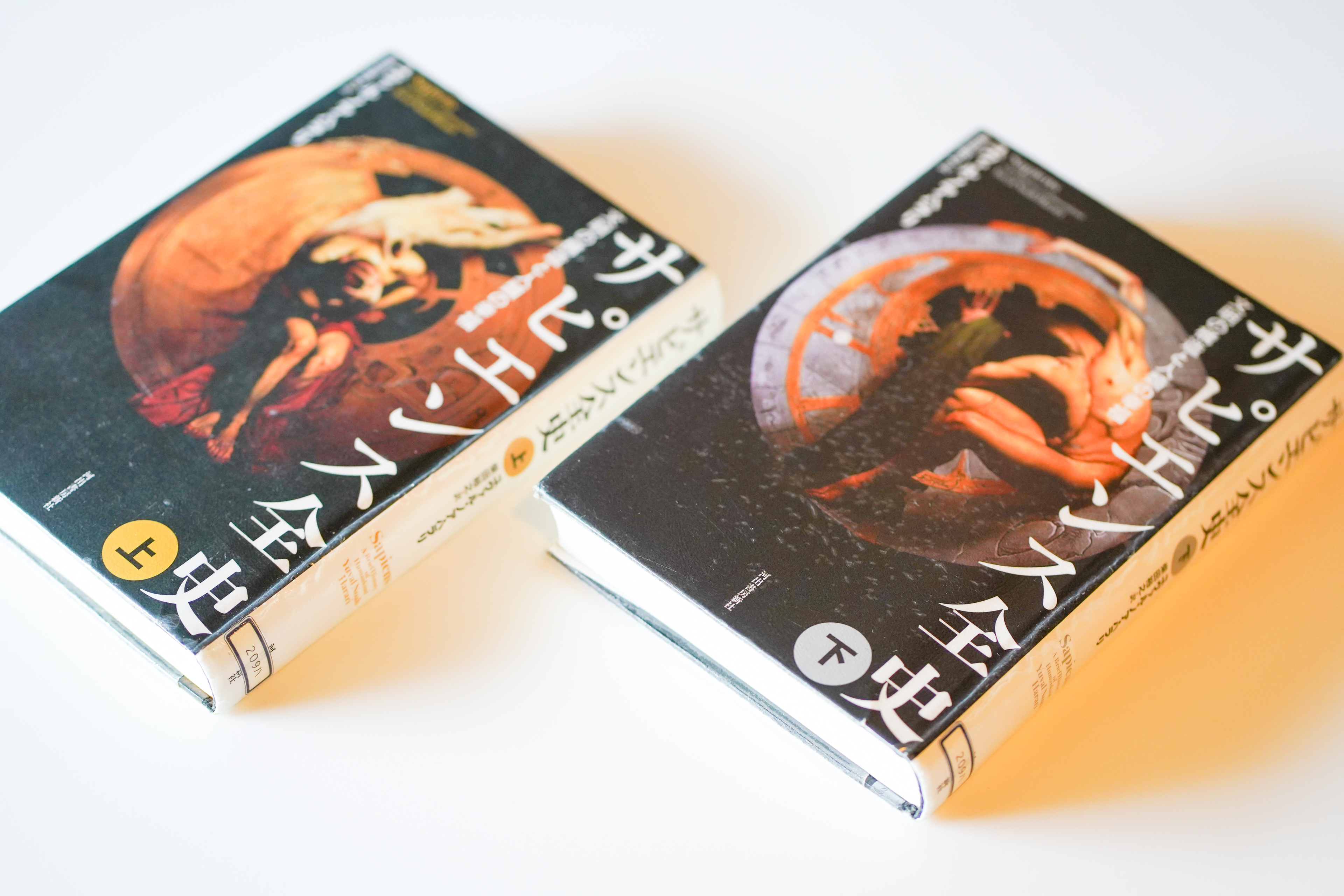
Yuval Noah Harari’s worldwide bestseller introduced this time, “Sapiens: A Brief History of Humankind”, is not just a history book. This is a book that exposes the true nature of the “huge fiction called the world” that we are unknowingly made to believe in, and hands us the key to the invisible cage we are trapped in.
The purpose of learning history is not to know the past.
It is to understand the “structure of domination” inherited from the past and liberate the current self.
1. The Cognitive Revolution: Why “Lies” Made Sapiens the Strongest
About 70,000 years ago, Homo sapiens was a trivial animal living quietly in a corner of Africa. Inferior to Neanderthals in physical ability, unable to win against even a single lion. Why did we become the rulers of the earth?
Harari found the answer in the “ability to believe in fiction”. He calls this the “Cognitive Revolution”.
“Objective Reality” and “Imagined Reality”
Many animals communicate with language. Information like “There is a lion across the river!” is essential for survival. However, the characteristic of Sapiens’ language was that it could talk about “things that do not exist at all”.
- “There is a spirit in that mountain”
- “We are proud warriors of the same tribe”
With this, Sapiens became able to cooperate flexibly on a scale of thousands or tens of thousands by believing in a common story (myth), even among total strangers.
What is important here is the fact that the world we live in has a dual structure.
- Objective Reality: Rivers, trees, lions, pain, hunger. (Physically existing things)
- Imagined Reality: Gods, nations, human rights, laws, corporations, money. (Things that exist because everyone believes in them)
Modern Fiction: The “Legend” Called Peugeot
Harari uses the French car manufacturer “Peugeot” as an example in his book.
The company Peugeot does not exist anywhere physically. Even if all factories are burned down and all employees are replaced, the corporation called Peugeot survives. That is because it is a “fiction (corporation)” defined in the story called law.
We are now more strongly dominated by this “imagined reality” than by rivers or lions.
Google, Japan, capitalism, human rights —. These are all common illusions in the brain of Sapiens.
The problem is that we forget that these are “illusions” and regard them as absolute like physical laws.
Are we not sacrificing our only reality, “our own life (time)”, for shapeless stories like “for the company” or “for the future of the country”?
2. The Agricultural Revolution: History’s Biggest Fraud
If you think “human history is a history of progress”, this chapter might be a bit shocking.
Harari asserts that the transition from hunting and gathering to agriculture (Agricultural Revolution), which began about 12,000 years ago, was “history’s biggest fraud”.
Reverse Thinking: “Wheat Domesticated Humans”
Generally, it is thought that “humans used wisdom to cultivate wheat and obtained stable food”. However, from the perspective of plant evolution, the fact is the opposite.
Wheat, which was just a weed in the Middle East, spread all over the world in just a few thousand years. Its survival strategy was a huge success. So, who worked for that? Humans.
Since wheat dislikes rocky land, humans removed stones while hurting their backs.
Since wheat dislikes other plants, humans were made to weed all day long.
Since wheat gets thirsty, humans carried water from far away.
As a result, serious damage remained in the body of Sapiens. Our bodies, originally evolved to climb trees and chase prey, are not designed to bend down and do farm work all day. Hernia, arthritis, malnutrition…
Humans did not domesticate wheat. Wheat domesticated humans.
Hunter-Gatherers vs Farmers: Who Was Happier?
- Hunter-Gatherer Era: It is estimated that 35-45 hours of work per week was sufficient. Meals were nutritionally balanced because they were taken from dozens of types of animals and plants, and the risk of famine was dispersed. They were excellent beings as individuals, using their brains and bodies fully to read minute changes in the natural world.
- Since Agricultural Revolution: Working hours increased dramatically, and meals became biased toward grains (carbohydrates). Infectious diseases spread because the population was dense and lived with livestock. And as surplus products were created, a class of “rulers and ruled” was born, and a structure where the majority of farmers were exploited was fixed.
The “total amount of food” increased. Thanks to that, the “number of copies of DNA (population)” of Homo sapiens exploded.
However, “individual happiness” was sacrificed. Evolutionary success (prosperity of the species) and individual happiness are different things.
“Trap of Luxury” Leading to Modern Times
Why did humans abandon the carefree life of hunting and gathering?
It was an accumulation of small desires to “make life easier”.
“If we sow seeds, we might not have to search for prey.”
“If the harvest increases, we can feed the children until they are full.”
However, if the population increases, mouths cannot be reduced. Once settled life begins, one cannot return to nomadic life. “As a result of seeking an easier life, being bound to harder labor than before” — this is the “Trap of Luxury”.
This applies painfully to us in modern times too.
We have smartphones, buy washing machines, and use email to save time. However, as a result, has life become more relaxed?
No, we have become busier than before, always required to reply immediately, and drowning in a flood of information.
Aren’t technology and “convenience” new masters exploiting our time instead of tools to free us?
Next, we will delve into the “imperial system” that integrated humanity and the “true nature of happiness” that hits us directly in modern times, and finally present a conclusion as Mindset Design.
3. Integration Named Domination — Empire, Money, Religion
After the Agricultural Revolution, disjointed human cultures were gradually integrated into one huge system.
Harari lists three powerful “fictions” that propelled this integration.
- Money (Economic Order): The only story “everyone believes”
- Empire (Political Order): A device to erase the boundary between “us” and “them”
- Religion (Religious Order): “Superhuman law” above humans
Your “Self” Might Be a Legacy of Empire
we cherish “our culture” and “tradition”. However, if we look at history, we understand that pure culture does not exist.
Roman Empire, Han Empire, British Empire… Historical empires violently conquered surrounding ethnic groups. However, after hundreds of years, the conquered people also learned Roman law, spoke Latin, and enjoyed Roman-style baths as “Roman citizens”.
We in modern times are the same. Many of the values we believe in as a matter of course, such as “democracy”, “human rights”, and “capitalism”, are cultural legacies of the European empires that once conquered the world or the American empire currently in progress.
What we think are “our own thoughts” might actually be just an OS (operating system) installed by former conquerors.
The Strongest Fiction “Money”
If religion and ideology are different, people kill each other. Christians and Muslims conflicted over the interpretation of God.
However, there was only one thing they could commonly believe in. That is “Gold Coin”.
Money has no substance. Just pieces of paper, metal, or data on a server.
However, by inter-subjective trust that “others should also accept this”, money created the world’s strongest cooperation network.
We use smartphones made by strangers and drink coffee grown by strangers. What makes this possible is not “love” or “friendship”, but “trust in the fiction called money”.
4. Scientific Revolution and Capitalism — New Religion Named “Growth”
In the past 500 years, human power has increased explosively.
The trigger was that Sapiens admitted for the first time “I don’t know (Ignorance)”.
Previous religions said “everything important is written in the holy book”, but science admitted “we still don’t know anything” and tried to gain new power through observation and mathematics.
Collusion of Science and Empire, and Capitalism
Science costs money. Exploration in the Age of Discovery and modern space development require huge funds.
So “Capitalism” appeared.
Capitalism’s greatest invention is “Credit”.
Lending and borrowing current money with trust in the future that “tomorrow will be richer than today” as collateral. By this system, the economy was obliged to “grow”.
Here, we return to the question of Mindset Design at the beginning.
“Why do we have to keep running?”
That is because the system called capitalism is a structure of bicycle operation that “collapses if it does not continue to grow”.
We are programmed by education and advertising to continue seeking “better living”, “newer smartphones”, and “higher status”. Because otherwise, the system will not turn.
Paradox of Happiness: Have We Become Happier?
Sapiens gained god-like power. Overcame famine mostly, suppressed plagues, and even reduced wars.
So, are modern people happier than their hunter-gatherer ancestors?
Harari’s answer is “hard to say yes”.
Because happiness is determined not by objective conditions (wealth or health) but by “correlation between objective conditions and expectations”.
People in the era without air conditioners or antibiotics were not unhappy because that was natural.
On the other hand, we in modern times are shown the glittering lives of others on social media and our “expectations” are constantly raised.
Furthermore, biologically speaking, happiness is just a biochemical system such as serotonin and dopamine. Even if annual income increases tenfold, the amount of serotonin secretion in the brain does not continue to increase. We get used to that state immediately (hedonic treadmill) and come to seek the next stimulus again.
5. Mindset Design — Hacking Fiction to Live
What “Sapiens: A Brief History of Humankind” thrusts upon us is the fact that “we are moved by fiction”.
- “Shared illusion” called nation or company
- “Domestication” by wheat or capitalism
- “Endless race” forcing growth
However, there is no need to despair. Knowing the structure is the first step to escape.
Finally, I propose a “blueprint of mindset” obtained from this book.
1. Use Fiction as a “Tool”
Fiction (company, money, title) is a convenient tool to run society. It is not evil in itself.
The problem is that humans are used by fiction that should be a tool (reversal of host and guest).
“Dying for the company” or “harming health for money” is an act of feeding substance to fiction.
By having a perspective (metacognition) to step back and see “this is just a rule of the game”, we can maneuver wisely within the system.
2. Choose “Attention” and “Time” Yourself
Like hunter-gatherers, we need to regain the sense of “here and now”.
Capitalism tries to steal your “Attention” and implant a new sense of lack (missing that, want this).
Through meditation, digital detox, and deep reading, cut off external stimuli and secure time to turn your consciousness to “what you really feel”.
It is a quiet but powerful resistance against the huge system.
3. Rewrite the Story
If human history has been made of “fiction”, you can rewrite the story of your life yourself.
The story that “it should be like this normally” is just something created by someone in the past.
Accepting biological constraints (death, instinct), what story do you believe in to live?
Do not hand that pen to society or others.
Do not be a victim of history. Let’s be a designer of your own life.


Comment